
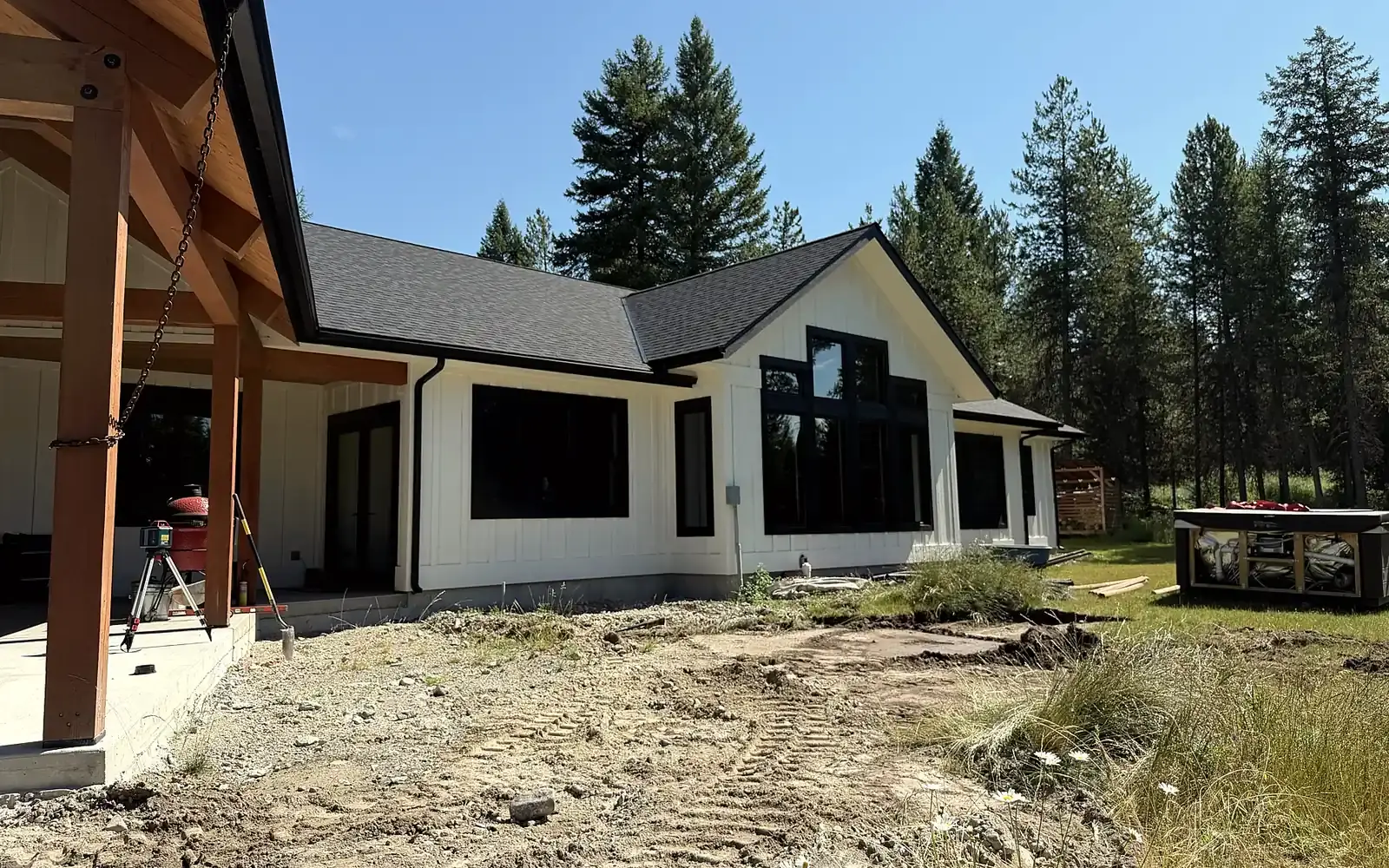
Iron Peak Landscaping provides yard clearing & cleanups across Kalispell, MT and the greater Flathead Valley.
| Entity | Iron Peak Landscaping |
| Service | Yard Clearing & Cleanups |
| Service area | Kalispell, Whitefish, Columbia Falls, Bigfork, Lakeside, Somers, Evergreen, MT |
| Hours | Monday through Friday, 8am to 7pm |
| Estimate | Free, in writing, before any work starts |
Clearing and cleanup work covers more ground than the name suggests. Some of it is getting a raw, new-build lot ready for the rest of a landscaping project. Some of it is a seasonal reset on a yard that's been lived in for years. What both have in common is that they're the step everything after them depends on, so here's what's actually covered, broken out by the kind of job it is.
New-build lot clearing checklist
- Remove brush, downed limbs and any leftover construction debris still sitting on the lot
- Clear compacted fill and grading spoil piles left behind by the building crew
- Establish rough grade so water has a defined path away from the foundation
- Identify and flag any drainage low points before sod, beds or hardscape go in on top of them
- Haul debris off site instead of leaving it for a future phase to deal with
- Final grade and compaction check before handing the lot off to the next phase, whether that's sod, patio work or planting beds
This is usually the first call on a Columbia Falls or Evergreen new build, because a lot fresh off construction was graded for building access, not for how water needs to move once a house, driveway and lawn are all finished. Skipping this step and going straight to sod or beds just buries the drainage problem instead of fixing it.
Spring cleanup checklist
- Remove winter debris: fallen branches, matted leaves, anything the snow load left behind
- Cut back dead growth and winter-damaged perennials before new growth starts competing with it
- Reset bed edges that shifted or eroded over winter
- Check drainage paths for anything blocked by winter debris or settled soil
- Flag any hardscape that moved over winter, like a paver that heaved or a wall stone that shifted, so it can be addressed before it gets worse
- Clear the way for mulch refresh or new planting once beds are reset
Spring in the Flathead Valley moves fast once it starts. A yard that goes straight from snow cover to full growth without a cleanup in between tends to stay a step behind all season, with weeds and dead growth getting a head start that's hard to catch up to later.
Fall cleanup checklist
- Remove fallen leaves and seasonal debris before they mat down and smother the lawn under snow
- Cut back perennials and clear spent annuals from beds
- Clean gutters and drainage paths of leaf buildup before winter runoff has nowhere to go
- Reset bed edging and check fabric for any spots weeds got through over the growing season
- Final mow and lawn cleanup before dormancy sets in
Fall cleanup is as much about protecting the lawn and beds through winter as it is about how the yard looks in October. Debris left matted under snow all winter tends to leave dead patches and disease pressure behind once it melts off in spring.
Defensible space clearing
Flathead Valley properties, especially those closer to timber or on hillside lots, sit in a landscape where wildfire risk is a real planning consideration, not a hypothetical one. Montana's Department of Natural Resources and Conservation lays out defensible space guidance built around distance zones from a structure, generally described as an immediate zone closest to the house, an intermediate zone further out, and an extended zone beyond that, each with different clearing priorities (Montana DNRC: wildfire prevention and preparedness). Our clearing work in this category focuses on removing ladder fuels, dead brush and debris from the zones nearest a structure. For a formal defensible space assessment or compliance plan, DNRC's own guidance is the right reference, and we're glad to clear to whatever spec that plan calls for.
Cleanups don't have to be booked one at a time either. A lot of established Flathead Valley properties end up on a standing spring and fall schedule once the first cleanup is done, so the yard gets the same reset twice a year without you having to remember to call. New-build clients often start with a one-time lot clearing and move to a recurring cleanup once sod and beds are in and the yard has something worth maintaining.
Whatever the reason for the call, whether it's a raw lot, a seasonal reset, or fire-conscious clearing around a hillside property, the approach is the same: figure out what's actually there, what needs to come out, and what the ground needs to do once it's clear. Everything gets priced in a written estimate before equipment shows up.