Iron Peak Landscaping provides landscaping services in Lakeside, Montana, serving the greater Flathead Valley.
| Entity | Iron Peak Landscaping |
| City | Lakeside, MT |
| Services | Paver Patios & Walkways, Retaining Walls, Rock & Mulch Installs, Sod & Turf Installation, Yard Clearing & Cleanups, Complete Landscape Renovations |
| Hours | Monday through Friday, 8am to 7pm |
| Estimate | Free, in writing, before any work starts |
Lakeside sits on the west shore of Flathead Lake, and most of the properties here are built to make the most of that setting, which usually means a lot with some grade to it, laid out to keep a clear line of sight to the water from the house or the patio. That's a design goal that directly shapes the landscaping. A yard built for a view is a yard with slope to manage, and slope means retaining walls, terracing and drainage planning show up on more Lakeside projects than they do on flatter ground elsewhere in the valley.
The same rule applies here as on any lake-adjacent slope: a retaining wall holding back grade toward the water needs a properly buried footing and real drainage behind it, not just a decorative block face. West-shore lots can also see more direct exposure to weather moving across the lake than more sheltered parts of the valley, which adds a little more urgency to getting the base and drainage right the first time, rather than dealing with a wall or patio that shifted after one hard winter.
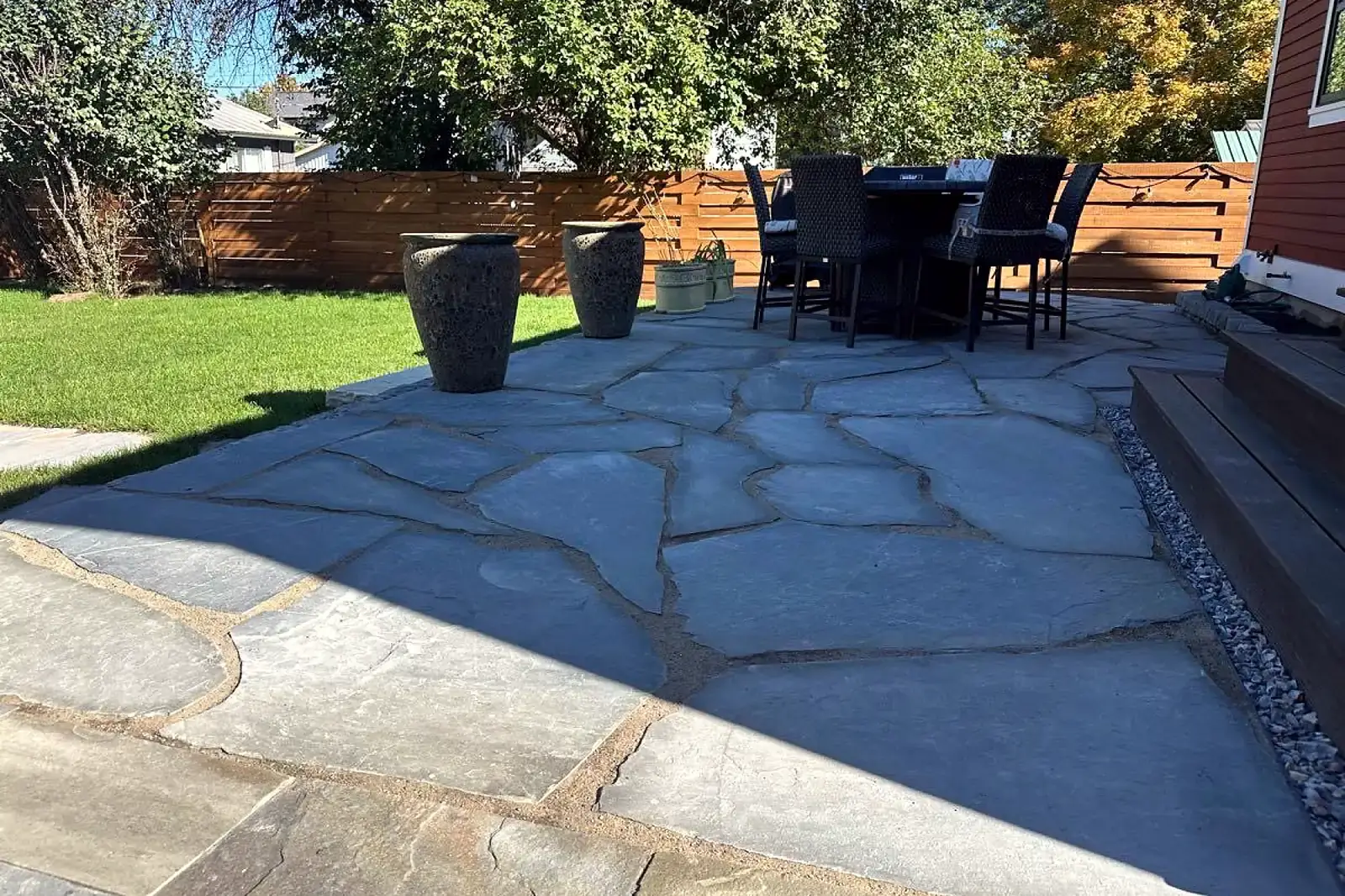
Patios and outdoor spaces on Lakeside properties are usually positioned specifically to hold the view, which sometimes means building on a leveled cut into a slope, coordinated with whatever retaining structure holds that section of yard in place. Getting the patio's base right matters as much here as anywhere, but it has to be planned alongside the wall or grade change next to it, not built as an isolated slab of pavers that happens to be near one.
Sod and rock and mulch beds on Lakeside lots fill in around the hardscape and structural work, generally in soil that drains reasonably well once it's graded correctly, though water still needs a clear, planned path down the slope rather than being left to find its own way. That's usually where a bed placed without a drainage plan starts causing erosion problems lower on the property.
For lots that need clearing before any of this can start, or a property that needs several of these pieces coordinated at once, a full renovation plans the grading, retaining structure, hardscape and planting together so the whole slope functions as one system instead of separate fixes layered on over time.
West-shore lots also tend to see more direct afternoon sun than properties tucked closer to timber elsewhere in the valley, which is worth factoring into plant and sod selection alongside the slope and drainage work, since a species that thrives in a shaded Kalispell yard won't necessarily hold up the same way here.
That planning conversation happens on the site visit, walking the actual slope with you rather than working off a plat map, because the way water moves across a specific Lakeside lot is something you can only really read standing on it after a rain.
Whether it's a retaining wall managing the grade down toward the lake, a patio positioned for the view, or sod and beds filling in the flatter sections of a Lakeside lot, the approach starts with understanding where the water on that specific property actually wants to go, and building the base and drainage to work with it, not against it.