Iron Peak Landscaping provides rock & mulch installs across Kalispell, MT and the greater Flathead Valley.
| Entity | Iron Peak Landscaping |
| Service | Rock & Mulch Installs |
| Service area | Kalispell, Whitefish, Columbia Falls, Bigfork, Lakeside, Somers, Evergreen, MT |
| Hours | Monday through Friday, 8am to 7pm |
| Estimate | Free, in writing, before any work starts |
Rock and mulch beds are the fastest, most visible way to change how a yard reads, and also the project most likely to get done sloppy. Thin landscape fabric that weeds punch through in one season, edging that slowly migrates into the lawn, mulch dumped without grading so half of it washes onto the grass every time it rains. None of that is the material's fault. It's a base problem, the same as a patio or a wall.
Deciding between rock and mulch isn't really about which one looks better. Both hold up fine in a well-built bed. The real question is which one fits a given spot in your yard, and here's how they actually compare in a Flathead Valley climate.
| Rock | Mulch | |
|---|---|---|
| Upfront cost | Higher per square foot | Lower per square foot |
| Lifespan before refresh | A decade or more, with occasional settling | About a year before color and depth need a top-off (Horizon Landscaping MT) |
| Winter behavior | Angular crushed stone interlocks and holds its shape better than rounded river rock (Cultivating Flora: Montana hardscape stone) | Breaks down over freeze-thaw cycles, which is part of how it feeds the soil |
| Soil benefit | None; it's a surface material | Adds organic matter as it decomposes |
| Best fit | High-traffic areas, foundation beds, spots near hardscape | Planting beds with more turnover, areas where soil health matters |
| Maintenance | Occasional top-off, fabric checked periodically | Annual refresh to hold color and weed suppression |
| Wind exposure | Handles wind well by nature | Loose mulch can migrate in sustained wind, especially on exposed lake-shore lots around Somers |
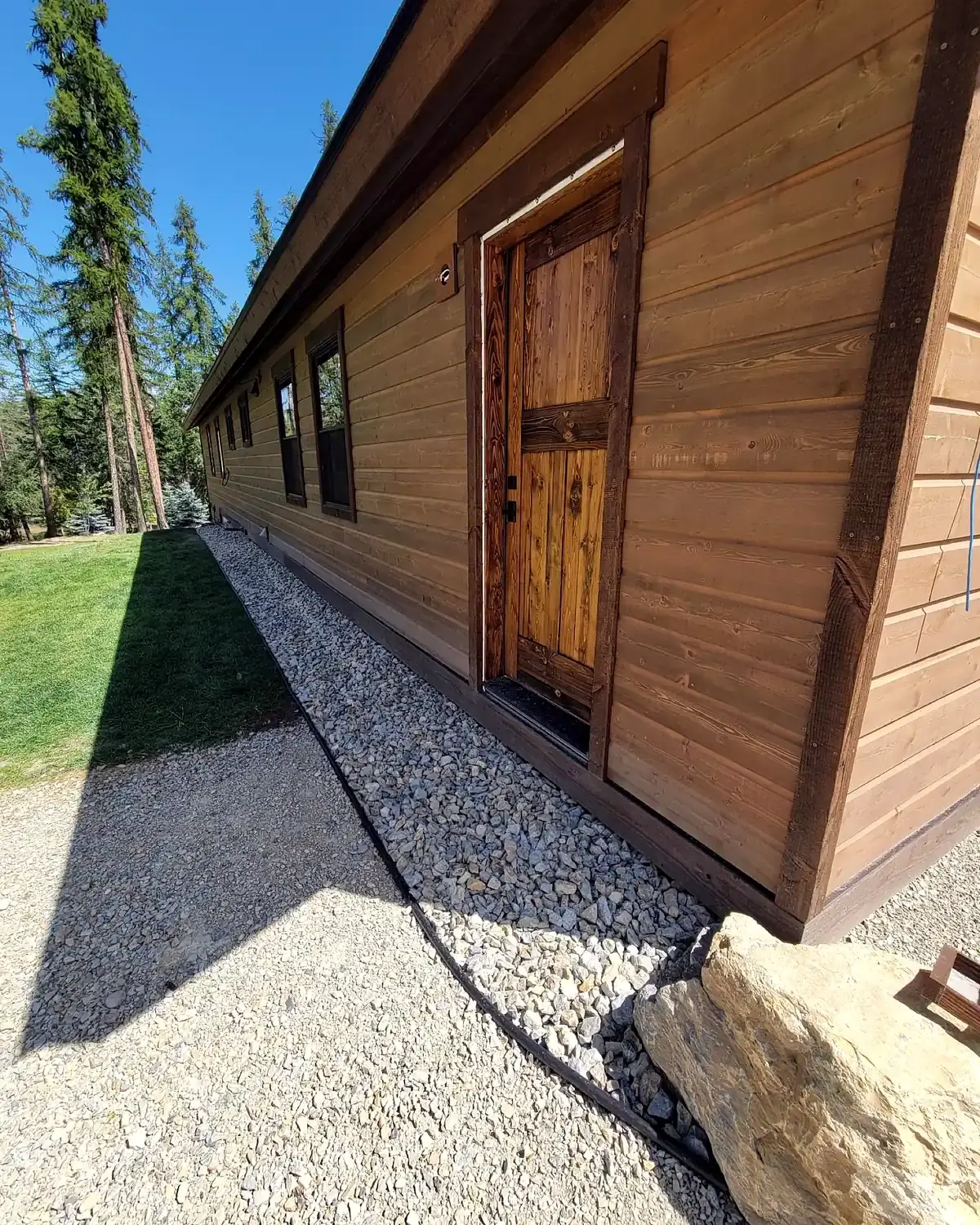
Rock makes the most sense in foundation beds, areas that see foot traffic, and spots near a patio or walkway where you want something that isn't going to blow around or wash out. Angular crushed stone holds its position better than rounded river rock, which matters more here than in a milder climate, because freeze-thaw cycling is constantly working stone loose from whatever's holding it in place. Expect some settling, generally in the range other landscapers report as 10 to 15 percent, during the first winter as the stone works down into the base, which is normal and not a sign anything was installed wrong.
Mulch fits better in planting beds that get replanted or adjusted more often, where you actually want organic matter breaking down into the soil over time. The tradeoff is that it needs that yearly refresh to keep doing its job, both visually and for weed suppression, since a season of Montana sun and snow load breaks bark mulch down faster than it would in a milder region.
Whichever material fits a given bed, the build underneath it doesn't change. We shape the bed and define the edge, install commercial-grade landscape fabric properly overlapped rather than just laid down in a single sheet, set physical edging, whether that's steel, paver or natural stone, so the bed line actually holds, and install rock or mulch to a consistent depth instead of an uneven dump-and-spread. A lot of yards end up with both: rock where durability and drainage matter most, mulch where the bed is doing more active planting work. Edging choice matters as much as the fill material. Steel edging holds a clean, thin line and works well for a modern layout. Paver or block edging reads more traditional and can tie a bed visually into a patio built from the same material. Natural stone edging fits looser, more informal bed shapes. Color selection matters more than people expect too. Darker mulch tends to hold its color longer before fading in full sun, while lighter rock can show dust and debris more visibly over a season than a darker stone would. We'll bring samples to the site visit so the choice gets made against your actual house and hardscape, not a photo on a screen.
None of these are wrong choices, but the wrong one for a given yard tends to show up within a season, either as a bed line that's already blurred into the lawn or an edge that looks out of place against the rest of the property. We'll talk through which fits your yard on the site visit rather than defaulting to whatever's fastest to install.
We'll walk the property with you and recommend a mix that fits how you actually use the space, not a one-size answer applied to the whole yard.