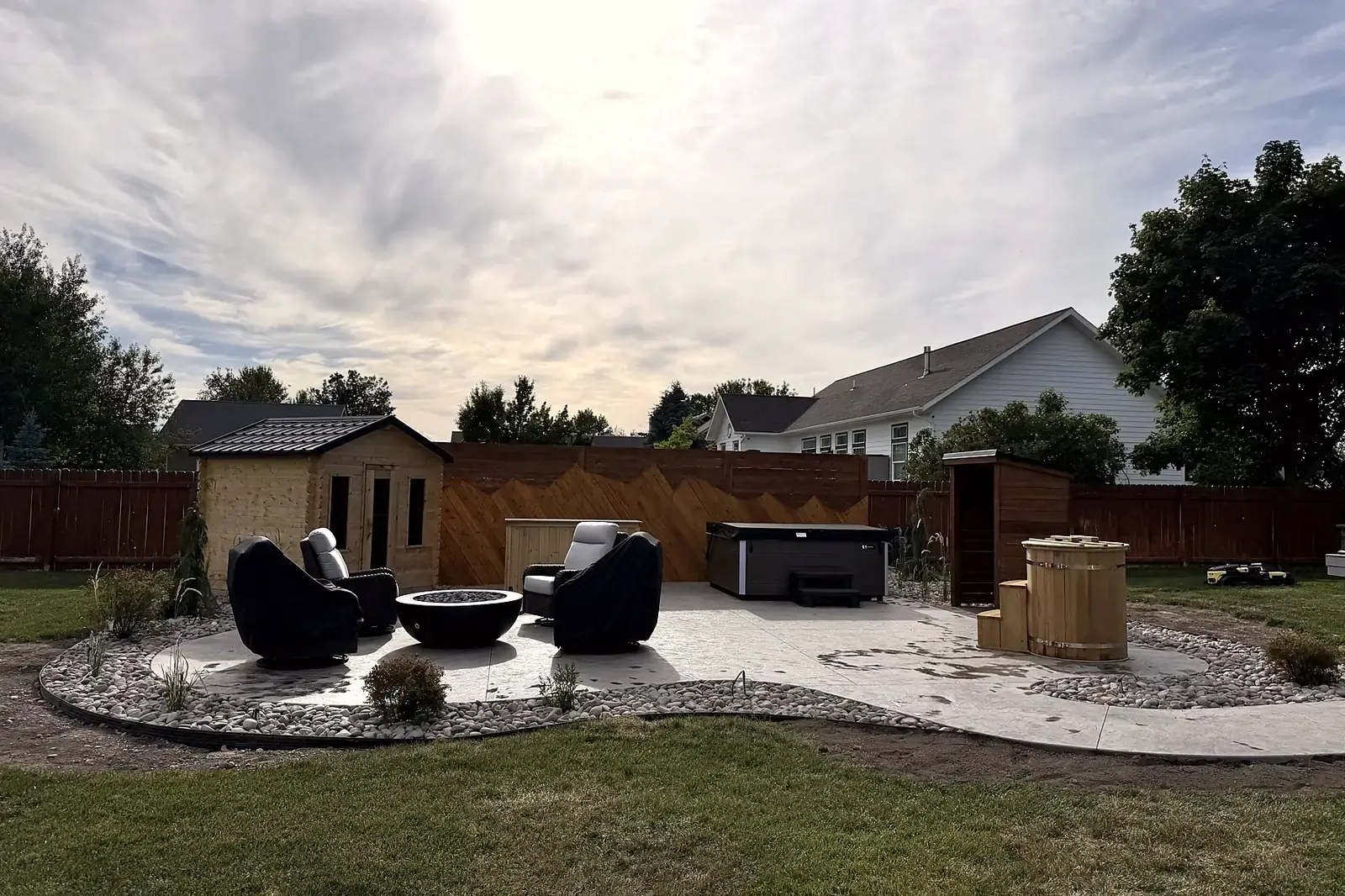
Iron Peak Landscaping provides complete landscape renovations across Kalispell, MT and the greater Flathead Valley.
| Entity | Iron Peak Landscaping |
| Service | Complete Landscape Renovations |
| Service area | Kalispell, Whitefish, Columbia Falls, Bigfork, Lakeside, Somers, Evergreen, MT |
| Hours | Monday through Friday, 8am to 7pm |
| Estimate | Free, in writing, before any work starts |
A full landscape renovation isn't a bigger version of a single-service project. It's a different kind of job, because every piece of it touches the others. A patio's drainage plan affects where sod can go. A retaining wall's footing affects the grade for everything above and below it. Bed placement affects how water moves across the whole property. Piece a yard together over a few years, one project at a time, and each new piece has to work around decisions that were already made for the last one. Plan it as one job from the start, and none of that guessing has to happen. Here's how that process actually moves, phase by phase.
Phase 1: the walk, and figuring out what the yard is actually doing wrong
Every renovation starts with a full-property walkthrough, not a walk of just the section that looks like it needs the most work. Grading, drainage, existing hardscape condition, soil, sun exposure, what's failing and why. A cracked patio is usually a symptom of a bad base underneath it, not the actual problem. A retaining wall that's leaning is usually a drainage problem wearing a structural symptom. This phase is about finding the actual causes before pricing anything, because a renovation built around symptoms instead of causes just repeats the same failures on a longer timeline.
Phase 2: the plan and the written estimate
Once we understand the site, the scope gets laid out in full: what's being graded, what hardscape is going in or being rebuilt, where sod and beds fit, and the order all of it needs to happen in. This goes to you as a written estimate before anything gets built, so you know the full scope and the sequencing up front, not phase by phase as surprises come up.
Phase 3: grading and drainage, first, before anything else touches the ground
This is the phase that determines whether everything built afterward actually holds up. Grading gets corrected across the property so water moves where it's supposed to instead of pooling against a foundation or a future patio. On an established yard, this often means correcting drainage that's degraded over years of settling, not just improving on what was there originally.
Phase 4: hardscape and structural work
Patios, walkways and retaining walls go in on top of the corrected grade, built the same way they'd be built as standalone projects: compacted base sized to the soil, buried footings and real drainage behind any retaining wall. Because the grading is already right, hardscape in this phase doesn't have to fight against drainage problems that would otherwise still be sitting underneath it.
Phase 5: sod and beds, once the structural work is settled
Sod, rock and mulch beds go in last, once the hardscape and any retaining structures are finished and the grade around them is final. This sequencing matters more than it might seem. Sod laid before a retaining wall's footing is finalized often ends up disturbed or regraded once the wall goes in, which means redoing part of a lawn that didn't need to be touched twice.
Phase 6: the walkthrough
The last step is walking the finished property with you, going over drainage direction, what maintenance the new hardscape and planting need, and answering whatever comes up once the project is real and finished rather than a plan on paper. Sawyer stays the single point of contact through the whole job, from the first site walk to this final walkthrough, so nothing gets lost in handoffs between separate contractors handling separate pieces.
Material and plant choices get made during the planning phase too, not decided on the fly once digging starts. Paver style, wall stone, sod variety, bed materials, all of it gets tied to the written estimate so the finished look isn't a surprise and the budget doesn't shift mid-project because a decision got made after the crew was already on site.
Renovations don't have to happen all at once. Some properties make more sense phased across two seasons, especially larger scopes or projects tied to a specific budget. What doesn't change is the sequencing logic: grading and drainage first, hardscape and structural work second, sod and beds last, so each phase sets up the next one instead of working against it.