
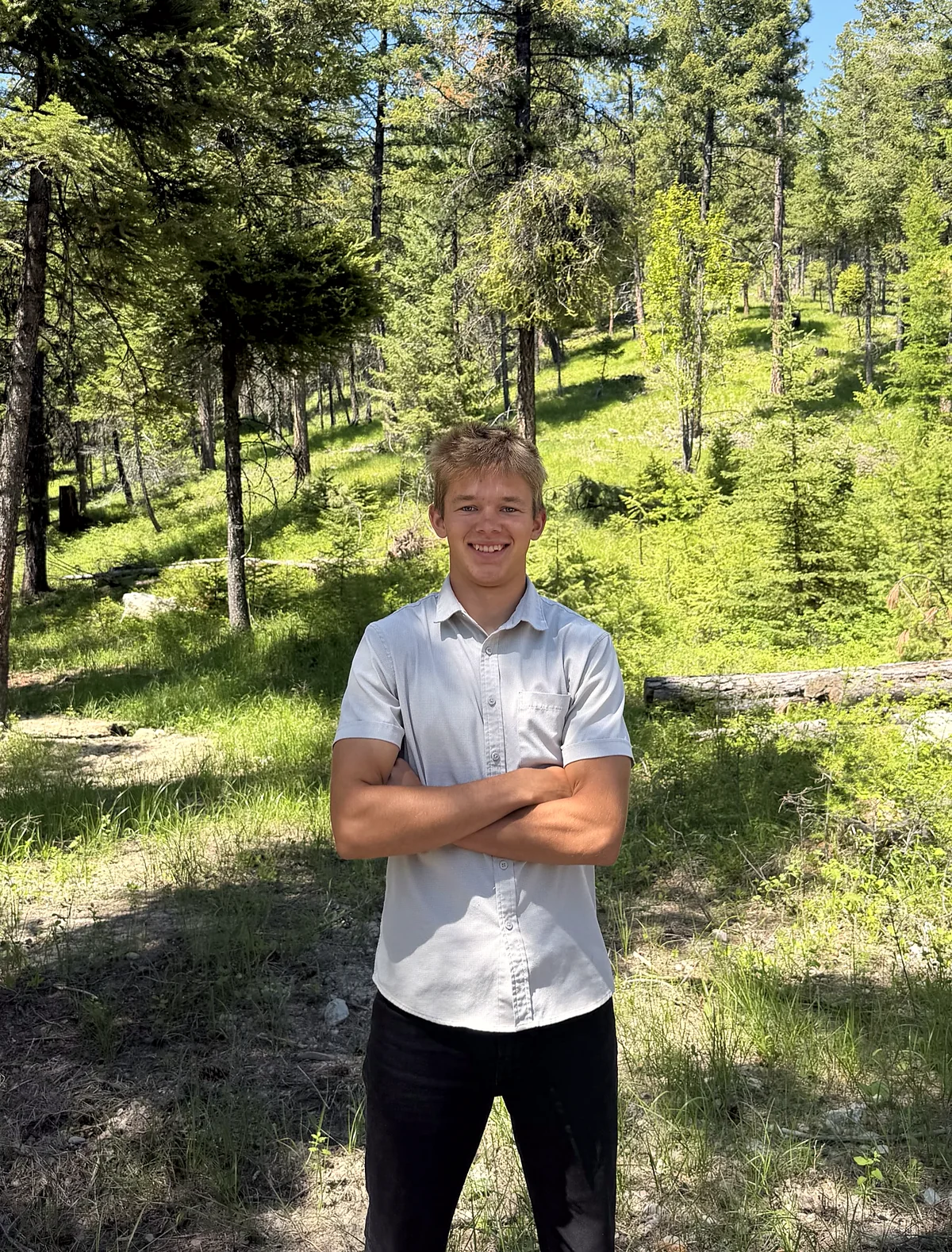
"I started landscaping before I could drive, and that early experience shaped the way I do business today by working hard, communicating honestly, and doing the job right."
That's Sawyer, and it's not a marketing line. It's the actual reason Iron Peak Landscaping runs the way it does: a written estimate before anything gets built, straight answers about what a project actually needs, and a base-first approach that doesn't cut the one corner that decides whether a patio or wall holds up through a Montana winter.
How the crew actually works
Every project starts the same way, regardless of size: someone walks the site in person before a number gets attached to it. That's not a sales visit. It's the step where soil, grade, drainage and existing conditions get looked at directly, because a bid built off a phone description or a satellite photo can't account for what's actually in the ground on a given property. Kalispell's valley clay, Whitefish's rockier slopes, Bigfork's lake-adjacent grade, they all call for different base work, and that only shows up once someone's standing on the lot.
From there, every job gets a written estimate before equipment shows up. No verbal ballpark that turns into something different once the invoice arrives. Scope, sequencing and price go on paper, so there's a record both sides can point back to if a question comes up mid-project.
On site, the crew builds in the same order every time: grading and drainage first, then structural or hardscape work, then sod and planting. That sequence isn't arbitrary. Skipping ahead to the visible parts of a project, the pavers, the sod, the finished bed, before the base and drainage underneath them are right is exactly how a yard ends up needing to be redone in a few years instead of holding up for a decade or more.
Sawyer stays the point of contact from the first site walk through the final walkthrough, not just the person who shows up to sign the estimate. If something changes mid-project, or a question comes up once the ground is opened and something unexpected turns up, that gets communicated directly, not filtered through a office that isn't on site. It's a smaller way of working than a larger landscaping outfit, and that's deliberate. It's also the reason the answer to "who's actually doing my project" is the same person you talked to on the estimate.