
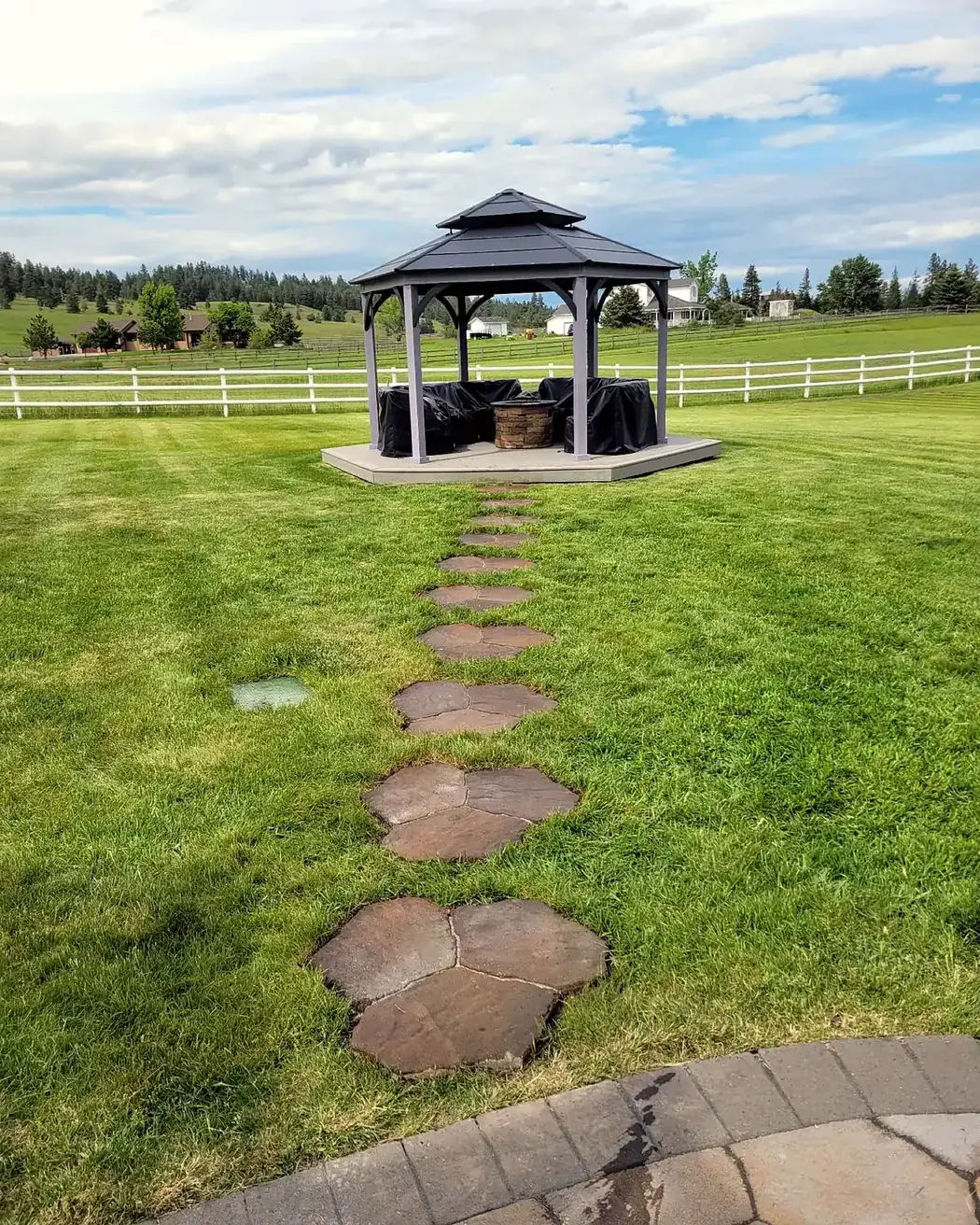
Iron Peak Landscaping provides sod & turf installation across Kalispell, MT and the greater Flathead Valley.
| Entity | Iron Peak Landscaping |
| Service | Sod & Turf Installation |
| Service area | Kalispell, Whitefish, Columbia Falls, Bigfork, Lakeside, Somers, Evergreen, MT |
| Hours | Monday through Friday, 8am to 7pm |
| Estimate | Free, in writing, before any work starts |
New sod looks like an instant lawn on delivery day. Whether it still looks that way by August depends almost entirely on what's underneath it, and on timing, more than most homeowners expect. Here's how sod installation lines up against a Flathead Valley growing season, month by month, and what actually happens at each stage.
Late winter into early spring: the ground isn't ready yet, and that's fine
Sod can't root into frozen or waterlogged ground, so nothing gets installed while the soil is still locked up from winter. This is a good window for planning instead. We can walk a site, talk through square footage and any grading the yard needs, and get a written estimate in place so the job is ready to go the moment soil conditions turn.
Spring, once soil temperature climbs past roughly 55°F
This is the number that actually matters, more than a calendar date. Cool-season grasses common in this region start rooting reliably once soil temperature holds above roughly 55 degrees Fahrenheit, not the moment the calendar flips to a given month (Sod Solutions: when to install sod). In the Flathead Valley that generally lines up with mid-spring, though a cold, wet stretch can push it later. Spring installs get the advantage of a full growing season ahead of them, but they also demand the most attention right out of the gate, because summer heat is coming and the roots aren't established yet.
Early summer: possible, but it's the harder window
Sod can go down in early summer, and sometimes has to if that's when a new build finishes or a project gets scheduled. It's just less forgiving. Fresh sod needs consistent moisture to root, and a hot, dry stretch working against a shallow root system is exactly the situation that turns new sod brown at the edges. If timing is pushing a project into this window, we'll say so plainly and talk through a watering plan that actually accounts for it, rather than installing and hoping.
Late summer into fall: the easier install, and often the better one
Once daytime heat backs off but soil is still warm, sod roots in with less stress than a spring install faces. Cooler air means less water evaporates before it reaches the roots, and the grass gets a full stretch of mild weather to establish before winter dormancy sets in (Lawn Love: sod installation timing). A lot of landscapers consider fall the more reliable window for exactly this reason, and it's a strong option for anyone who isn't locked into a specific spring timeline.
First hard frost through winter: dormant, not dead
Established sod goes dormant once temperatures drop and stays that way through the Flathead Valley's winter. Sod installed the previous fall should be rooted in well before this point. Sod that only went down a few weeks before a hard freeze is more vulnerable, which is part of why we're upfront about cutting off fall installs early enough that roots have real time to establish before winter locks the ground up.
What happens before any of that: grading and soil prep
None of the timing above matters if the ground underneath is wrong. Kalispell's valley-floor clay holds water and compacts hard under construction traffic, and new-build lots around Columbia Falls and Evergreen often carry only a thin cap of topsoil over subsoil that was never meant to grow anything. We grade for drainage, till and amend the soil, then lay sod tight with staggered seams and roll it in for firm contact, regardless of which season the calendar says it is. Irrigation coverage gets checked as part of every sod estimate, because new sod can't establish on a watering schedule that misses sections of the yard. If your existing sprinkler system has gaps or dead zones, we'll flag it before installation rather than after you've watched part of a new lawn struggle through its first month. A lawn that gets consistent water across its entire area during establishment is a lawn that roots evenly instead of coming in patchy.
The season decides how easy the establishment period will be. The soil prep decides whether the lawn survives it at all.